Generic Names

Scott Allen posed a very interesting question in response to this post. Here's what Scott's wondering:

"How can you go about protesting a first use claim if you're not the one making the claim of prior use, but you simply have material knowledge of it (heck, so does Google) and don't want to see a generic word hijacked as a mark? Last August, it seems that Learn.com filed a trademark on the word "webinar" claiming first use in commerce June 6, 2000
. Now I know for a fact that the word was used in commerce before that, because my company was using it, and we borrowed the term from WebEx. I did some searching on Google (webinar + 1999) and quickly found several more examples, including a couple from my employer at the time. I hate to see generic words hijacked like this (familiar with Entrepreneur Media?). What can be done about this?"

Great question, Scott. The USPTO is actually quite good at catching these marks at the gate. For instance, the example you bring up is a perfect case in point. On January 9th of this year, the USPTO issued a refusal based on that the mark is merely descriptive. It's now on the applicant to submit evidence & arguments supporting their rights to registration.

It's my understanding that only those who "believe that he or she would be damaged by the registration of a mark on the Principal Register may oppose registration by filing a notice of opposition with the Trademark Trial and Appeal Board." As far as what the USPTO defines as "damage" – hmm, any ideas out there?

A great lesson here for anyone that coins a catchy name or term is to trademark that sucker right away. A good example of this is mobisodes ®,which is a registered trademark owned by Twentieth Century Fox.A Google ® search pops up 43,900 hits on this term. Now, of course, it's on Fox to protect their trademark

Hope that answers your question Scott! Let me know if I can answer anything else for you!


What factors should be considered in choosing a strong trademark?
What are some common causes that the USPTO would refuse a trademark?

* * *
Thank you to Isabel Isidro from PowerHomeBiz for interviewing me about trademarks and business names! Check out the Home Business Guide to Understanding Trademarks and Protecting Business Names!

Due to unforeseen circumstances, I won't be able to post for a week or so. I'll be back as soon as possible :)
Martha Stewart in the News Again

The residents of Katonah are a tad upset with the 3rd richest woman in entertainment.

My only question is – was there the same ire when she originally filed for the geographic term, Katonah, back in 2005?

Check out the old listings by going
here and enter these serial numbers: 78727055 & 78727070


What are the different types of marks?
What factors should be considered in choosing a strong trademark?

How to Determine Trademark Infringement?

This post was inspired by all the hullabaloo caused by the iPhone (who owns it? Apple? Cisco?).

Determining if marks infringe can be tricky and each situation varies from another.


The general rules to keep in mind are:

1) Are the names similar in Sound, Appearance or Meaning?


2) Are the industries the same or similar to one another?

3) Are the names confusingly similar to the average consumer? In other words, could customers be confused and assume that both companies are affiliated?

4) Do the trade areas cross? What about the advertising routes -- are the products/services advertised in common places?


Here's what the
USPTO has to say about this matter:

"The principal factors considered by the examining attorney in determining whether there would be a likelihood of confusion are:


the similarity of the marks;
and
the commercial relationship between the goods and/or services listed in the application.

To find a conflict, the marks do not have to be identical, and the goods and/or services do not have to be the same. It may be enough that the marks are similar and the goods and/or services related."


If you find yourself trying to determine if a similarly named company is going to be a problem, it's best to contact a private search company or a trademark attorney.


What is Conflict? What is a Strong Similarity?
Trademark FAQ


Cisco & Apple Getting Ready to Duke it Out in Court

There was quite the buzz earlier this week about Apple's latest gadget, the iPhone. Today's buzz is all about the lawsuit Apple received from Cisco for trademark infringement. So, what way do we think this is going to go? My bets are on Cisco getting a princely sum.


Trademark FAQ
Can I get monetary damages when my trade name is used elsewhere?


USPTO Celebrates a Milestone

The USPTO announced via a press release that their millionth online trademark application was filed. The millionth applicant since 1997 is pretty impressive. And while, yes, I agree that the electronic system is a thing of beauty if you're in the trademark world, I do have a bit of contention with a portion of that press release.

The millionth application was filed by Donald Junck for the name Bait Craft. Now, of course, I'm going to be biased but I'm going to have to disagree with this: "As many small business owners have done, [Junck] filed the application himself, demonstrating how easy and convenient TEAS is to use--regardless of the applicant's location or resources."

I do think TEAS is a marvelous tool; however, delays tend to be the result for someone not familiar with the verbiage or the process or what the USPTO expects to be on the application. While some mistakes can be corrected, others cannot. And those mistakes that can be corrected still end up delaying your registration.


Also, the press release neglected to mention that Mr. Junck had been through the process once before so he was familiar with what the USPTO wanted. Bait Craft was his registered trademark from September 15, 1998 until June 18, 2005. On June 18, 2005 the USPTO canceled his mark because a
Section 8 was not filed. To check out the old listing, go here and enter in the Serial Number 75328408.

Trademark Application FAQs
Why would the USPTO refuse a trademark?


They're Celebrities AND Inventors


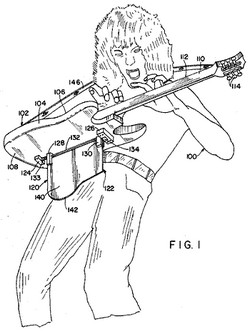
Ironic Sans had a great post yesterday about celebrities and their patents. Using Google's new Patent Search feature, the folks at Ironic Sans found 18 patents by your not-so-typical inventor (is there a typical inventor, though?).


Is it a patent or a trademark that you need?


Do You Hear What I Hear?

I received a question in response to this post about sound trademarks. "

  • 'What has to be provided to trademark a particular sound?'

According to TRIPs the ability to file and register a sound trademark "depends on [the] aural perception of the listener which may be as fleeting as the sound itself unless, of course, the sound is so inherently different or distinctive that it attaches to the subliminal mind of the listener to be awakened when heard and to be associated with the source or event with which it struck."

Okay, now what does that actually mean? Basically, the sound has to be 'inherently different or distinctive' in that when someone hears it the sound is associated with the mark.

For instance, MGM has successfully filed and registered their distinctive lion's roar. To see more sound trademarks, go here.

Filing a sound trademark application is similar to filing a traditional trademark except in respect to the sound itself. Further details can be found here.

  • 'In The US what does this cost to trademark a sound?'

The filing fee for the USPTO is determined by the number of classifications filed and not by the type of mark. The USPTO filing fee is $325 per International Class. "

  • 'Are there many countries where sounds cannot be trademarked?'

There are different rules and restrictions, which more can be read about here.

Read more about trademarks.

Read other Trademark FAQ.


Who's Got a Question?

Yesterday's post got me thinking about you guys, the lovely readers and the questions you may have. So, I'm going to leave this post up for a few days & ask you…

Are there any questions I can answer for you? They can be about trademarks, copyrights, patents or starting a business.

If so, please comment & I'll make a post about it. If you'd like your web site listed with the post, be sure to include it.

Or if you prefer to remain anonymous, please email me. I'll then post about it but take out any personal details.

You can also chat with me live here - scroll down and click the Chat Online button.

I'm looking forward to reading your questions!


Sony's ® Not Playing Around

The mania surrounding the release of Sony's ® newest incarnation of the Playstation ®, the PS3 has subsided a bit. It helps that the first batch of gaming systems has sold out.

Sony has taken preventative measures to ensure that they are the one & only importer of their new wunderkind.

Read more about trademarks

What if someone's using your trademark or trade name without your permission?

Oxfam Gets into the Fray

Oxfam, "a development, relief, and campaigning organisation that works with others to find lasting solutions to poverty and suffering around the world," has voiced their concerns to Starbucks ® about Ethiopia's coffee trademarks.

For more about trademarks, click here. For more about USPTO Application FAQ, click here.

Apple ® Says NO to the gPod

Ichiro Kameda, a Japanese based businessman, has joined the ranks of those getting not-so-fun letters from Apple ®. There was quite a bit of hub-bub last year about Apple ® launching their own gPod but so far that hasn't seemed to surface in the marketplace.

However, Mr. Kameda's device is, uh, um of a sexual nature and even passed through the USPTO's research process so we'll see how successful Apple is with their latest bout.

I wonder if people are associating POD names with Apple because the brand is so well-known OR because of all the press about the company threatening legal action against the random POD's 'round the world. Hmm…

K-Fed's Having a Helluva Week

Britney Spears has filed a petition for divorce from Kevin Federline. And if that wasn't enough for the wanna-be rapper, he also "made an undisclosed cash payment" to Thomas Dolby in their copyright infringement case.

Patent Your Invention -- Resources, Links & Books

To protect an original invention OR a significant improvement to an existing product, a patent would be filed. Here's the USPTO's definition.

NOLO is a great, free informational site. Also, be sure to read what else the USPTO (United States Patent & Trademark Office) has to say about patents:

USPTO's FAQ about Patents
USPTO's How to Get a Patent
Search Patents

Associations may be a good avenue to explore. These organizations will address many of the thoughts, questions and concerns you'll inevitably have as well as many you haven't anticipated yet.

International Federation of Inventors' Associations
United Inventors Association
Directory of Local USA & Canada Groups

Research, research, research – this cannot be stressed enough. Read as much as you can. Here are some book titles that are relevant:

Getting a Patent:
* Patent It Yourself (11th Edition) by David Pressman
* Patents and How to Get One : A Practical Handbook by U.S. Department of Commerce
* How To Make Patent Drawings Yourself: A Patent It Yourself Companion by Jack Lo
* The Inventor's Notebook: A Patent It Yourself Companion by Fred E. Grissom

There are plenty of free informational resources out there.

Free Articles:

Patent – How to Get One by Michael Russell
Invented Something? Get a Patent by Thomas Choo
How to Select a Patent Attorney by Lisa Parmley
How to Patent Your Invention by Neil Armand
Can You Start Selling Your Invention Before Patenting It? by Xavier Pillai

Lawyers on the Loose!

The USPTO will be experimenting with telecommuting lawyers starting next year. Read more about that here.

A Veritable Voluminous Vat of Varying Varieties of Vagueness
aka The USPTO Glossary

The USPTO offers a great service to the public by having the glossary available for viewing. However, some of the language makes you want to say 'huh? what was that?'

So, let's take a look at some of the important words/terms that every person wanting a trademark should know.

First & foremost -- trademark. What is it? Do I need it? Why do I need it? The word trademark can have entire posts written about it; luckily, I've got several for you to check out:

What is a Trademark?
What is a Trademark Search?
Do You Need a Registered Trademark?

Okay, let's move on to some of the trickier definitions.

When an application is filed with the USPTO, there are four different filing bases: use of the mark in commerce, intent-to-use, pending foreign application & foreign registration. Having a pending foreign application or registration is a whole different ball of wax & probably won't apply to most folks reading this so let's stick with the first two.

* Use-based application: You can read the USPTO's definition here. Basically, this basis is chosen if the name, logo or slogan has been used in connection with the goods/services across state lines or between the US & any other country. Let's use some examples:

You live in Florida & you have a clothing line with a name & a logo. You've sold some pieces through your on-line web site to customers in Florida, New York and the Bahamas. Your mark is in use in commerce.

Your financial consulting company is based in Mesa, AZ and you have a small roster of clients, all of whom reside in Arizona. Your mark is not in use in commerce. Your mark, however, is in use for the state of Arizona.

* Intent-to-use application: After scrolling a bit, you can read the USPTO's definition here. Essentially, if you're only doing business in 1 state or not at all, you'll be filing as an intent-to-use. Here's a couple of examples:

You plan on starting an on-line retail site selling home decor items. You've got your DBA, the domain name secured & some business cards printed up; however, you have not yet made a sale. Your mark is an intent-to-use.

You live in California & you have a greeting card company. All of your cards are handmade and all carry your name & logo on the back. You've sold at holiday trade shows all across the country. Your mark is in use in commerce.

Now the intent-to-use filing has a bit of a hiccup in the trademark process. The USPTO will not actually grant registration of a mark until it is in use in commerce. Basically, this requires some money & the filing of another form to the USPTO.

Are there any terms or words that you've run across that I could explain for you? Let me know by way of commenting & I'll write up a post for you.

Dead Apples

There's been a lot of hullabaloo about Apple's filing for iPhone in the trademark world.

That got me thinking about Apple's dead marks -- let's take a look at what could have been...


iSchool was filed for on September 21, 2001 for International Classes 9, 38, 41 & 42. This mark became abandoned in August 2002 for failure to respond to the USPTO. The mark, specifically IC 41, sounded particulary interesting to me:

"Educational services; educational services, namely, providing a web-based student information system, featuring student grades, attendance records, and homework assignments, that enables school districts, schools, administrators, teachers and parents to record, access, report, and manage their student information and performance data, and allows students and parents to access such information and data, in real time" sounds like a fantastic feature for all schools.

Offlinert became abandoned on July 30, 2004 for failure to respond to the USPTO's refusal for registration on the Principal Register due to the mark being merely descriptive.

Lastly, Cinema Tools became abandoned in March of 2006 again for failure to respond to the USPTO. One of the reasons for refusal was that good ole descriptive tag.

A quick check of the PTO shows 531 dead marks owned by Apple Computer Inc. Some of the more interesting names I came across:

Junkyard for "computer software for sharing, managing, viewing and editing files, documents, and electronic mail messages"
FlowerPower for "computers, computer hardware, computer peripherals, and user manuals sold as a unit therewith"
Internet Safari for "providing temporary use of on-line non-downloadable children's educational computer software"
Espresso for "computer software, namely, programming language software and manuals sold therewith"

Take a look for yourself by following these steps:

Go here and choose New User Form Search

Enter Apple Computer into the Search Term box and change the Field to Owner Name

Click Submit Query and voila!
Trademark Renewal & Maintenance – How Do I Keep My Trademark?


After you’ve applied for your trademark, there will be a waiting period of approximately 18 months before your name is actually registered with the United States Patent & Trademark Office (herein referred to as the USPTO). Until then, it will be listed as "Pending."

Sometimes there are hold-ups; the USPTO may not allow you to use the name you’ve chosen to apply for because there is a similar name already trademarked. In this case, you will receive an "office action", which is a notification from the USPTO. If you do receive an office action, it might be due to the USPTO simply needing more information in order to complete your trademark application.

However, it also may be because your name is blocked by another name, which is the worst case scenario, and another reason why
it is incredibly important to purchase comprehensive research before you file for your name!

After your name is registered with the USPTO, between years 5-6 you will file a "Continuous Use Form." This form conveys to the USPTO that you have been using your trademarked name, and you intend to continue to stay in business or to sell your product under that name. After a 10 year period, you will be required to renew your trademark.

It is important to be aware that some maintenance is involved in keeping your trademarked name.

It is recommended that each year you commission research on your name. This is done to ensure that no one has begun using your name since doing initial research on its availability. By continuing to do annual research, you are adding a greater sense of protection for your name and business.

It is up to you to remain informed on what businesses are using what marks, and how this might affect your own personal business ventures.

Once trademarked, you may take legal recourse if another business has begun using your name. A "cease and desist" letter is a way of conveying to another business that they are infringing upon your trade-name. While you do not need a trademark in order to draw up a letter such as this, having a federally registered trademark gives you a greater ability to disallow the use of your name by another.

These documents should always be drawn up by an attorney, rather than an individual, as the action conveys that you are taking legal recourse against another business. Please communicate with the USPTO directly, a trademark attorney OR a trademark research company if you have more specific questions about maintaining your trademark!


Author: Marit Lee

Copyright Registration Sound Recordings Works


First, let's pinpoint what falls into the sound recordings category. Here's what the
US Copyright Office has to say:

"Sound recordings are 'works that result from the fixation of a series of musical, spoken, or other sounds, but not including the sounds accompanying a motion picture or other audiovisual work.' Common examples include recordings of music, drama, or lectures."


Here are some books about copyrights:

The Copyright Handbook
How to Register Your Own Copyright

Now to file an application:


The application is fairly simple & the cost is $45 per application.

Despite what others state, a "poor man's" copyright is NOT the same as registering it. Here's what the
US Copyright Office has to say:

"The practice of sending a copy of your own work to yourself is sometimes called a 'poor man’s copyright.' There is no provision in the copyright law regarding any such type of protection, and it is not a substitute for registration."


Lastly, here are two great resources:


NOLO's Copyright Resource Center
NOLO's Creative Arts & Music Resource Center


I wanted to send out a THANK YOU to David Giacalone, 'the founding editor & host' of shlep for his kind words about our blog.

Trademark 101: What is a Trademark?

Source Welcome to the first day of class! Before we get into the nitty gritty of trademarks, let’s go back to the beginning. And the be...